
Journal · Illustration
The Razor's Edge of the Pre-War Future: A Conversation with Henrik Delehag
Drawing the chaos below from a tower studio
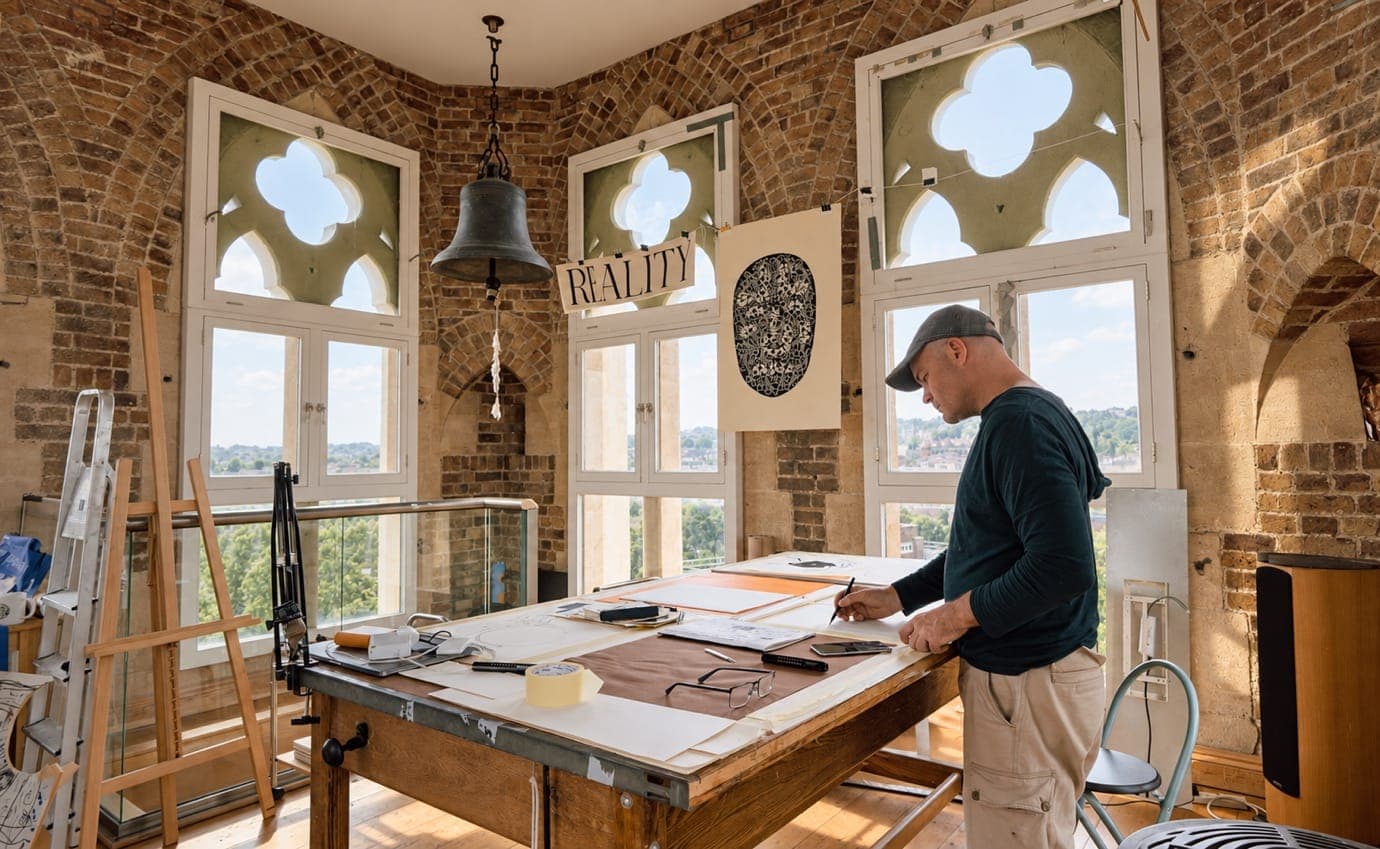
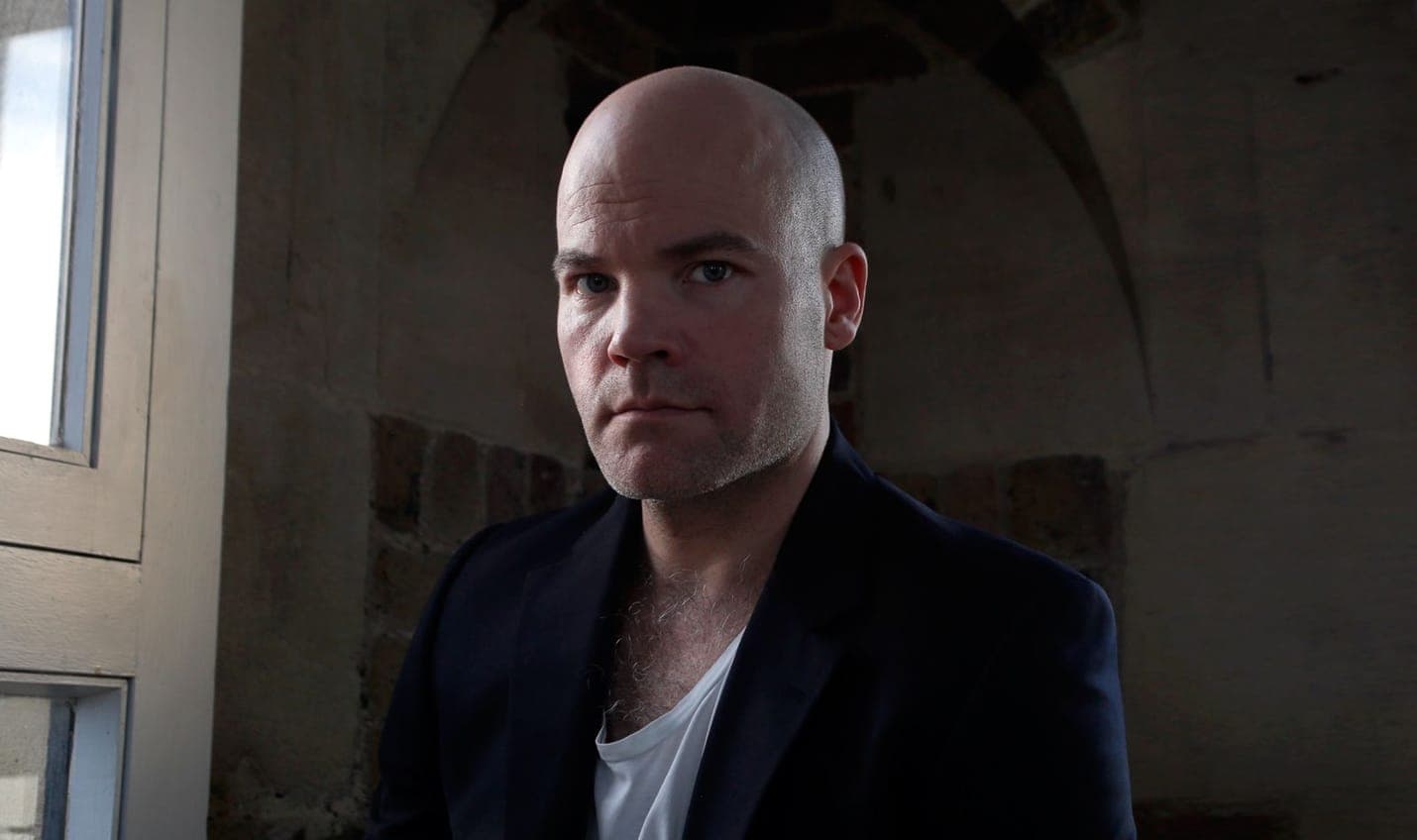
There is a quiet defiance in the way Henrik Delehag speaks about his craft. Sitting down in a conversation with Artistivo in his workspace high above the city, he looks down on a world trapped in exhausting, repetitive cycles, using his pen and a razor-sharp understanding of form to make sense of the chaos below. He does not call himself an artist — in fact, he detests the term, viewing it as a withered cliché weaponized by modern culture to reassure us that everything is fine. Instead, Delehag identifies as a "pre-war artist," an observer on the brink, seeking to break structural conventions and help humanity gather around simpler, distilled truths.
In this exclusive editorial, we dive deep into the mind of Henrik Delehag, exploring his creative evolution, his aggressive critique of the "capitalist circus" of the modern art world, and his radical proposition to dismantle the Gregorian calendar in favor of a straight line toward human progress.
The Vantage Point and the Razor's Edge
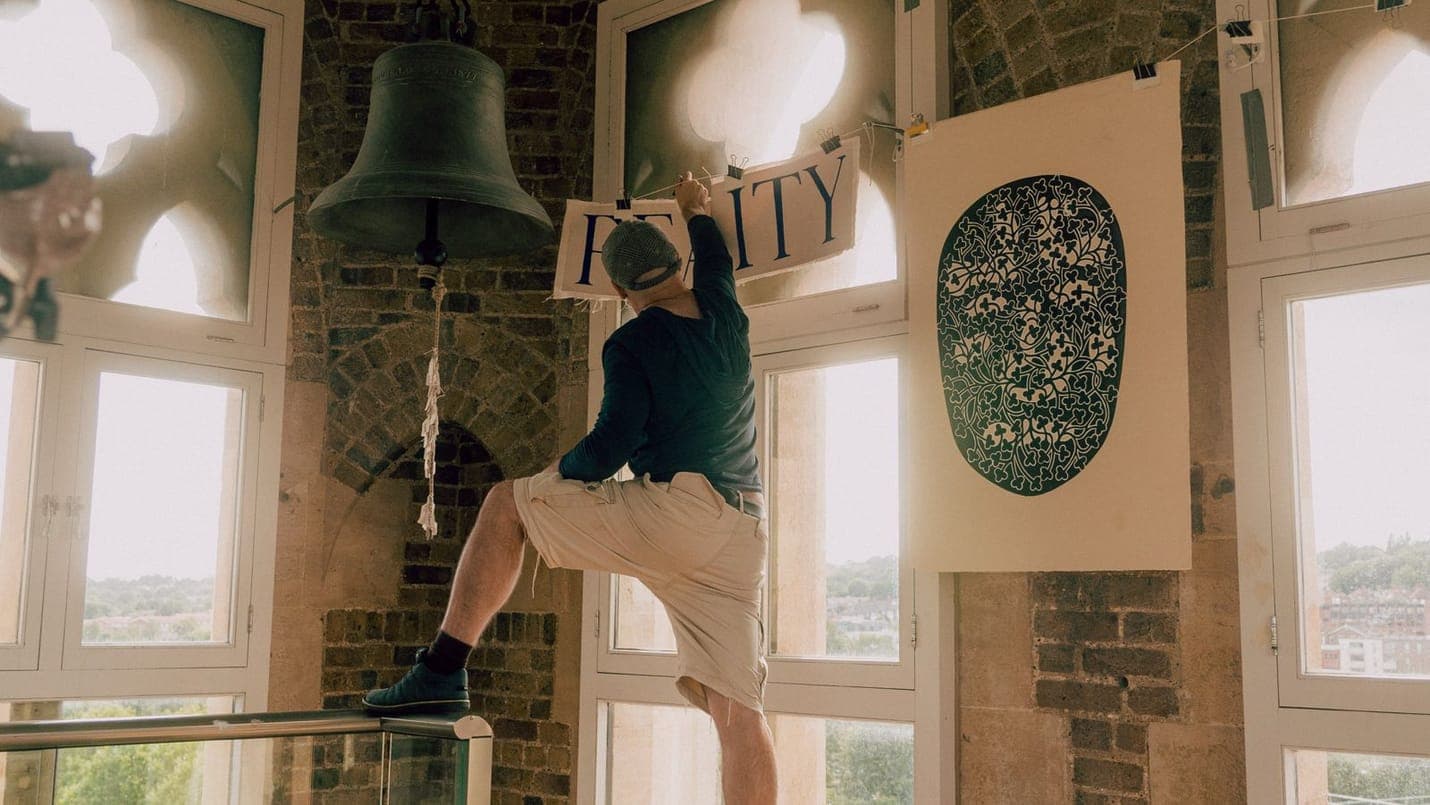
To understand Delehag's work, one must understand his vantage point. His studio, perched high up, serves as more than just a place to draw — it is an observational tower. It gives him the license to see patterns and gather the chaotic truths from the streets below, refining them in the quiet of his workspace before sending them back down in simpler formats.
This need for a physical overlook is not hypothetical. When Delehag was forced to relocate to a ground-level studio for a year, he explained in a conversation with Artistivo that he felt the absence of this perspective immediately, realizing he could not produce the same works without his vantage point. It is from this elevated position that he explores the razor's edge between black and white, a space he traces back to an early obsession with typography and the distilled precision of words and symbols. For Delehag, this boundary is where the truth is investigated.
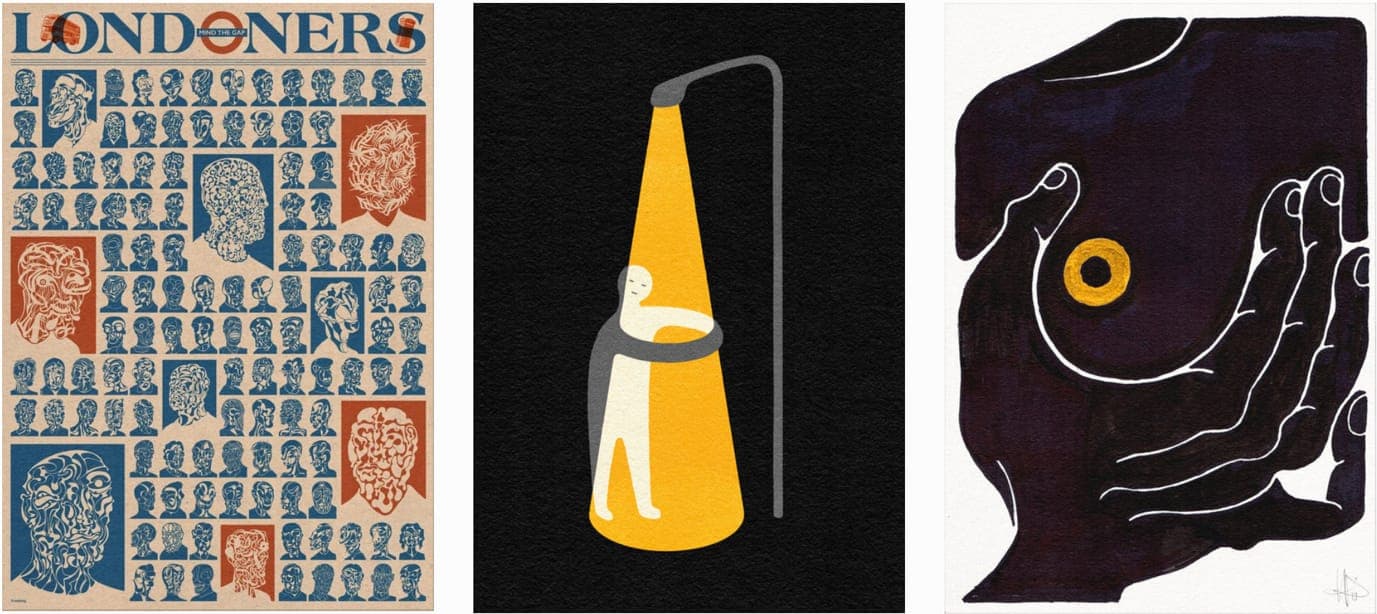
His path to this perspective was far from linear. Growing up, drawing was a crucial tool he developed to navigate a difficult world, a way to break down reality and elicit understanding. At age eighteen, a school career advisor suggested graphic design — a revelation that introduced him to his "tribe". This led to a fifteen-year career in advertising. While his commercial career informed his practices, returning to full-time visual work brought its own set of complications. Delehag admits in a conversation with Artistivo that creating art "on the side" as a commentary on his full-time life was often more giving and fruitful than doing it full-time, which separated him from the daily friction of the "capitalist hub" he once observed from within.
Beyond the "Post-War" Cult and the Capitalist Circus
Delehag's refusal of the "artist" label is not a marketing gimmick; it is an aggressive ideological stance. He calls himself a "pre-war artist" to separate himself entirely from the "post-war artists" — a crew of gentlemen, including Pablo Picasso and Andy Warhol, whose legacy he detests. While he acknowledges they filled a necessary function in their time, he argues that contemporary culture is obsessed with these historical figures, and that their work no longer speaks to the modern crisis.
"We're just seeing the same shit," Delehag notes in a conversation with Artistivo, pointing to museums and galleries that weaponize culture to reassure us that everything is as it has always been. His criticism of private galleries and commercial art fairs like Frieze is even more aggressive. He describes them as a "capitalist circus," nothing more than high-end fashion brands like Prada or Gucci catering to wealthy buyers with vast wall space.
In Delehag's eyes, art should serve as a mirror to help society transition and translate global events. Instead, modern political art relies on borrowed, retro expressions — such as anti-communist or anti-Nazi propaganda designs copied onto Instagram — revealing a struggle to find new visual languages for contemporary oppression. He also rejects the modern obsession with individual expression, which he believes has been commodified into a strategy for personal competition, much like the self-help trends of the 1950s. To him, visual work should be collaborative and service the community, rather than fuel an uninteresting competition between individuals.
Dismantling the Circle: The Delehag Calendar
Perhaps Delehag's most radical intervention is his total rejection of the Gregorian calendar. He describes our standard calendar in a conversation with Artistivo as a "dog's dinner of flawed science, dodgy astrology, and smash-and-grab capitalism," completely arbitrary and detached from nature.
His core objection is structural: the Gregorian calendar packages time into repetitive cycles of weeks, months, and years. Delehag argues that this cyclical structure condemns humanity to repeat its mistakes over and over again. "Human progress should go in a straight line, not in circles," he asserts.
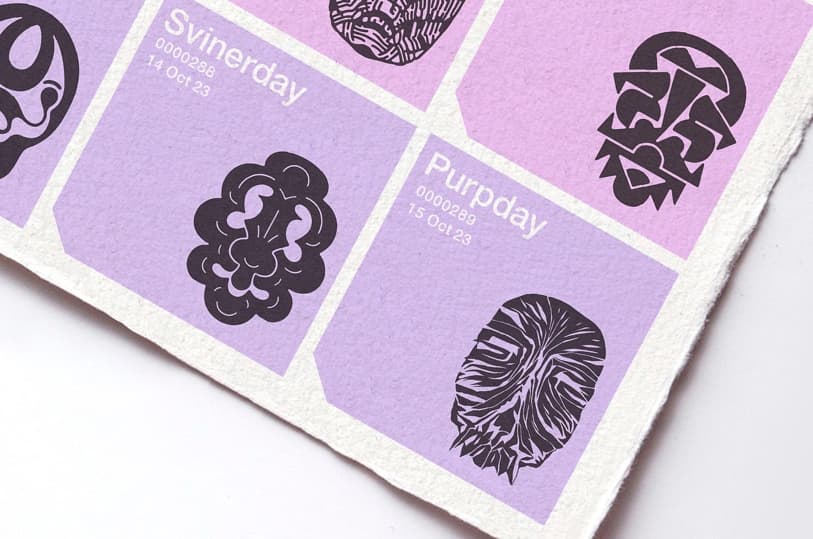
To break this loop, he designed the "Delehag Calendar," a system where every single day has a completely unique name, allowing time to move forward continuously without the artificial boundaries of a seven-day week. While critics ask about the logistical sacrifices — such as the loss of standard birthdays and holidays — Delehag insists that freeing humanity from this structural prison is a sacrifice well worth making.
The God Series: Reclaiming the Sacredness of the Day
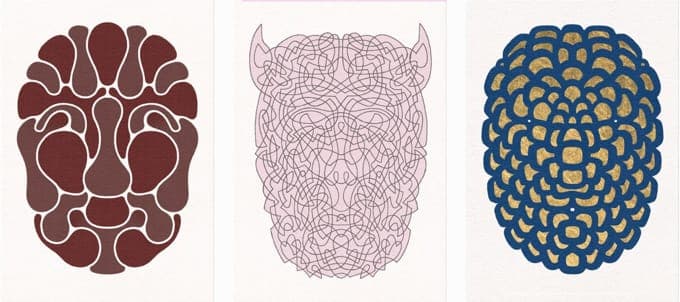
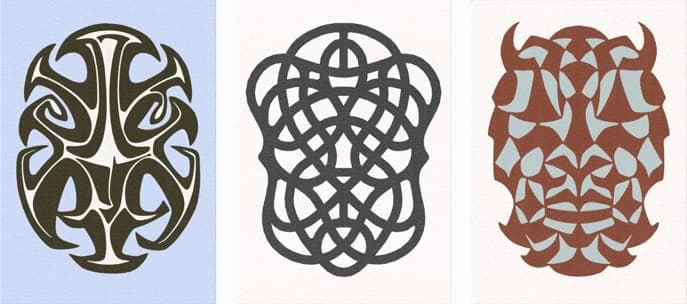
At the heart of the Delehag Calendar is a visual pantheon often referred to as the "God series". Delehag prefers to call these creations "god icons" or "protectors" designed for his calendar.
The purpose of these icons is to restore the sacredness of the day unit, which our current system trivializes into "just another Wednesday or Sunday". By assigning a unique, handcrafted icon to each day, Delehag encourages people to wake up to a completely new concept every morning, promoting constant rebirth and reimagining.
This is a direct rebellion against the modern work week — a system where we work continuously only to receive a brief weekend break. Delehag points out a historical truth that many overlook: the modern weekend was actually invented by industrialist Henry Ford, who recognized that granting workers two days of rest after five days of labor was simply the most efficient way to maximize their output over a lifetime.
By replacing the Gregorian week with a straight line of unique days, Delehag's calendar challenges us to live fully in the present, free from the mechanical cycles of modern labor.
A Rebel Mirror for a Chaotic Era
Henrik Delehag's work is not meant to sit quietly on the walls of a billionaire's parlor. It is a rebellion against the structures we take for granted — from the calendars on our walls to the institutions that define what art is allowed to be. On the razor's edge between black and white, Delehag continues to draw, translating the chaotic truths of our era into symbols we can gather around. Whether he starts a revolution or simply forces us to look closer at the circles we run in, his pre-war vision is a necessary mirror for our uncertain future.

Keep reading
Related Articles
“Madrid illustrator Alfonso Elola on keeping his Netflix and Paramount key-art work strictly separate from his personal practice, and how his mother's psychology books and a childhood fascination with anatomy became a surreal visual language all his own.”
Journal · Painting
Valentina Brostean: The Alchemy of Identity, Transformation, and the Mediterranean Muse
“Serbian-born, Barcelona-based painter Valentina Brostean on trading commercial design for pure expression, her 'alchemical' blank-canvas process, and the personal mythology of strong feminine figures and humanoid guardians that fills her house-museum.”

“Barcelona-based French artist Hélène Panier on splitting her life between biotech engineering and drawing, why her women look calm outside and feel deep keys of emotions within, and how diluted acrylic on raw canvas lets the fabric drink the pigment.”