
Journal · Sculpture
Fiona Morley: The Whispering Line, Gremlins of the Mind, and the Geography of Connection
Wire sculpture from a garden studio in Brighton
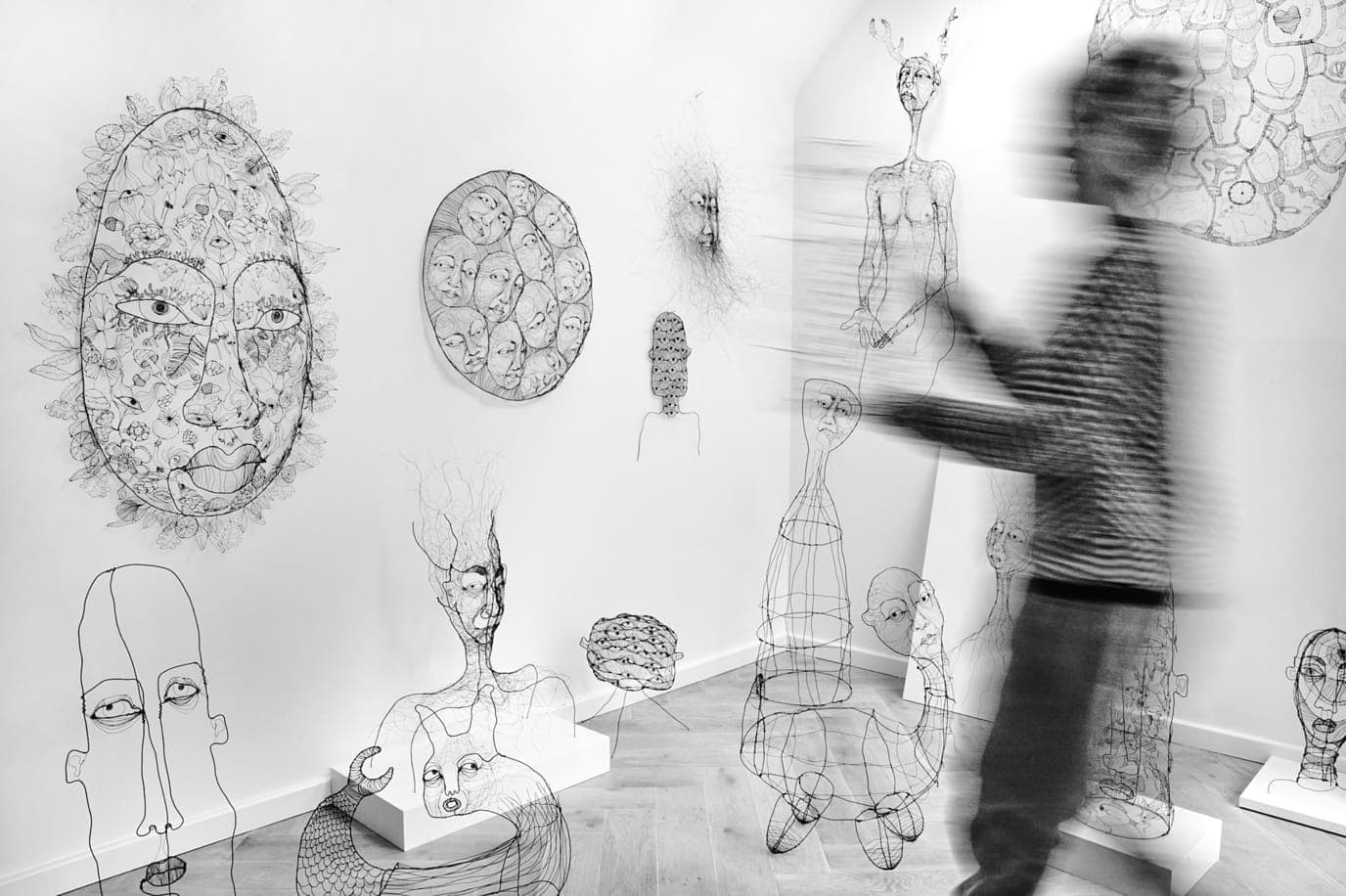
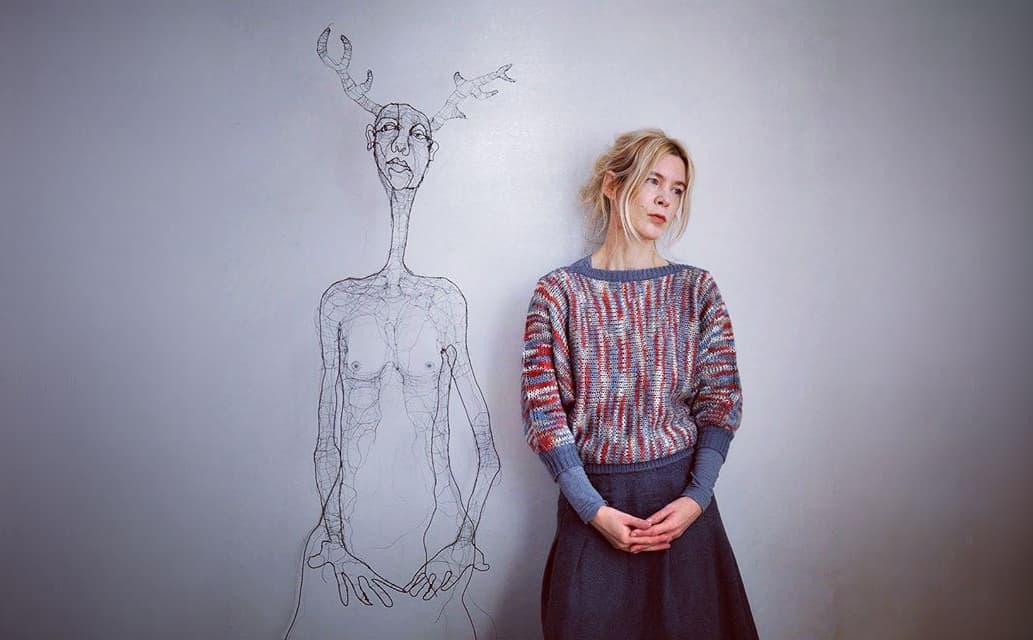
To step into the sanctuary at the bottom of Fiona Morley's garden in Brighton is to enter a quiet, leafy world where the boundaries between drawing and sculpture dissolve. Here, the air is still, but the space is alive with three-dimensional drawings suspended in mid-air. Morley is an artist who works with the most delicate of boundaries — weaving, twisting, and knotting raw metal to explore the fragile, invisible threads that bind humanity to itself and to the land. Her sculptures do not impose themselves on their environment; instead, they exist as ghostly, shadowy outlines, inviting viewers to contemplate what lies in the in-between spaces of our existence.
The Perfect Marriage of Drawing and Space
For Morley, the path to sculpture was not direct, but rather an organic, inevitable evolution of a childhood obsession. "It was drawing that brought me to wire," she recalls. "I drew obsessively as a child and a teenager." This early devotion to the line on paper served as her primary tool for making sense of the world, a way of "understanding others and myself."
However, when she entered art school, she felt a physical pull toward three-dimensional form, eventually finding her home in the sculpture department. The true catalyst for her signature technique occurred during a casual, serendipitous encounter. A friend in the jewelry department handed her a simple roll of binding wire to play with. "And since then I've never looked back," Morley says. "The wire brought the drawn line literally off the page and into space. And so this combined both my love of drawing and working three-dimensionally sculpturally. Perfect marriage."
Weaving the Human Form: Hands, Snippers, and Shadows
After leaving art college, Morley challenged herself to see how far this "perfect marriage" of materials could go. She set out to build a human head out of the same thin binding wire she had used during her studies. Working without heavy machinery or traditional sculptural armatures, she relied entirely on her own hands and a pair of snippers.
By twisting, knotting, and cutting the wire, she began constructing an irregular, web-like structure to mold the general shape of the skull. From there, she was able to pull out the features — the nose, the curve of the ears, the slope of the jaw — adding density to the wire mesh in the same way an illustrator adds cross-hatching or shading to a sketch to define form.
This painstaking process results in works that feel deeply ephemeral. "It's the unseen, what we can't perceive from our human perspective that really interests me," Morley explains. "And I like that my work doesn't appear entirely solid, but it's — it's ghostly and shadowy, which I hope expresses this sense of here but not here at the same time. The in-between places, the places that are not tangible."
Gremlins of the Mind and Shared Mythologies
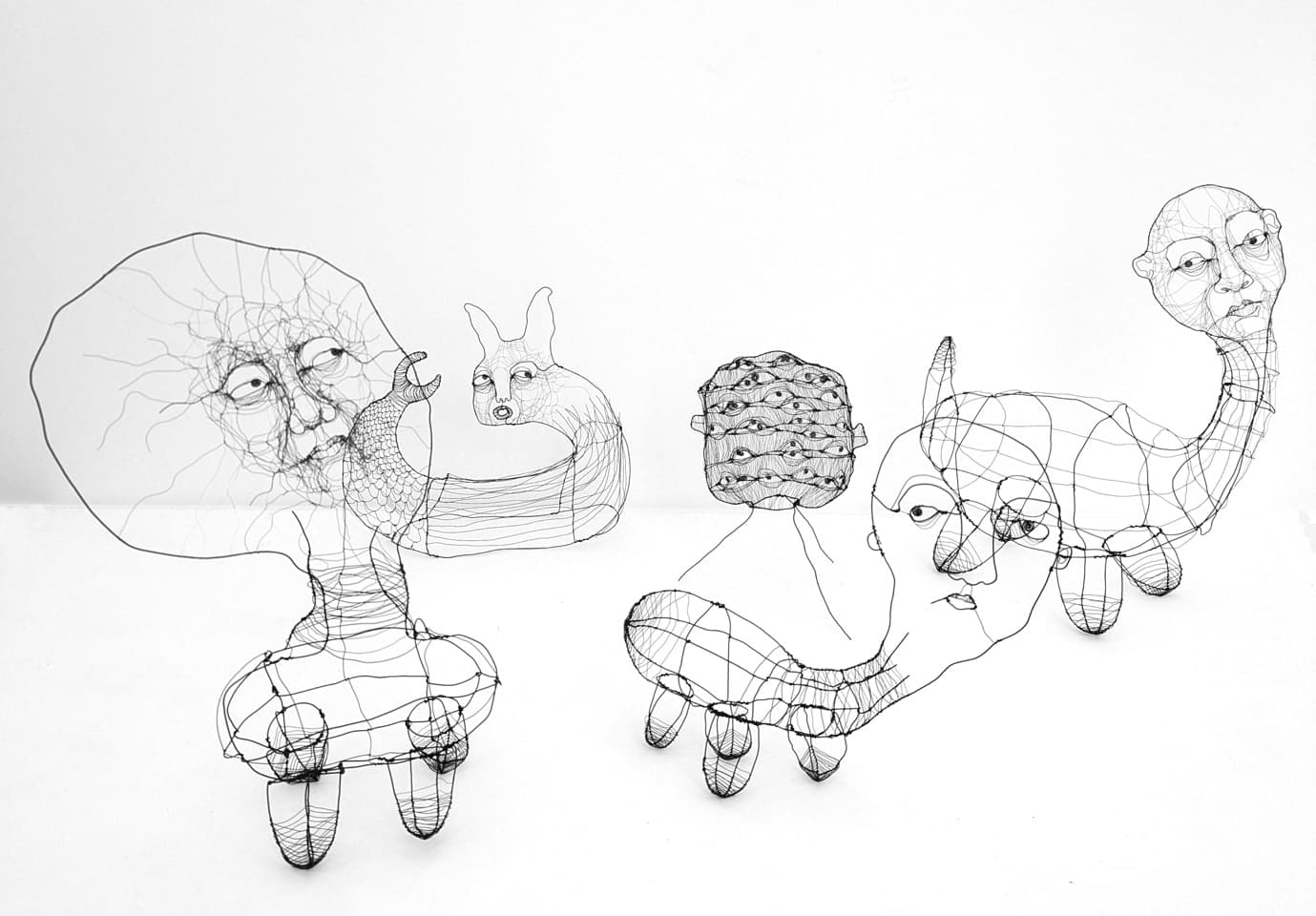
As Morley's familiarity with her medium grew, she began moving away from literal representations of the human form, allowing a more intuitive, subconscious stream of creation to take over. She started making figures and creatures that were intentionally odd and discordant — a process she found immensely liberating.
She terms these strange, expressive figures her "gremlins of the mind." "They're like imaginary beings at the fringes of experience with their own individual intents," she notes. Rather than representing literal monsters, these figures are drawn from a collective human reservoir. Morley sees them as "conjured up by a whole mixture of our shared past, our mythologies and folklore, and with a good helping of dreams thrown in."
By blending human faces with elements of plant life, birds, and animals, Morley's sculptures visually embody a "single essence" — a physical manifestation of our deep interdependence. Whether combining a metal cheekbone with the leaf of a plant or the wing of a bird, she seeks to illustrate the profound connection between humanity and the natural world, illustrating "the feeling that we are all connected to everybody and everything."
Fleeting Imprints in Time
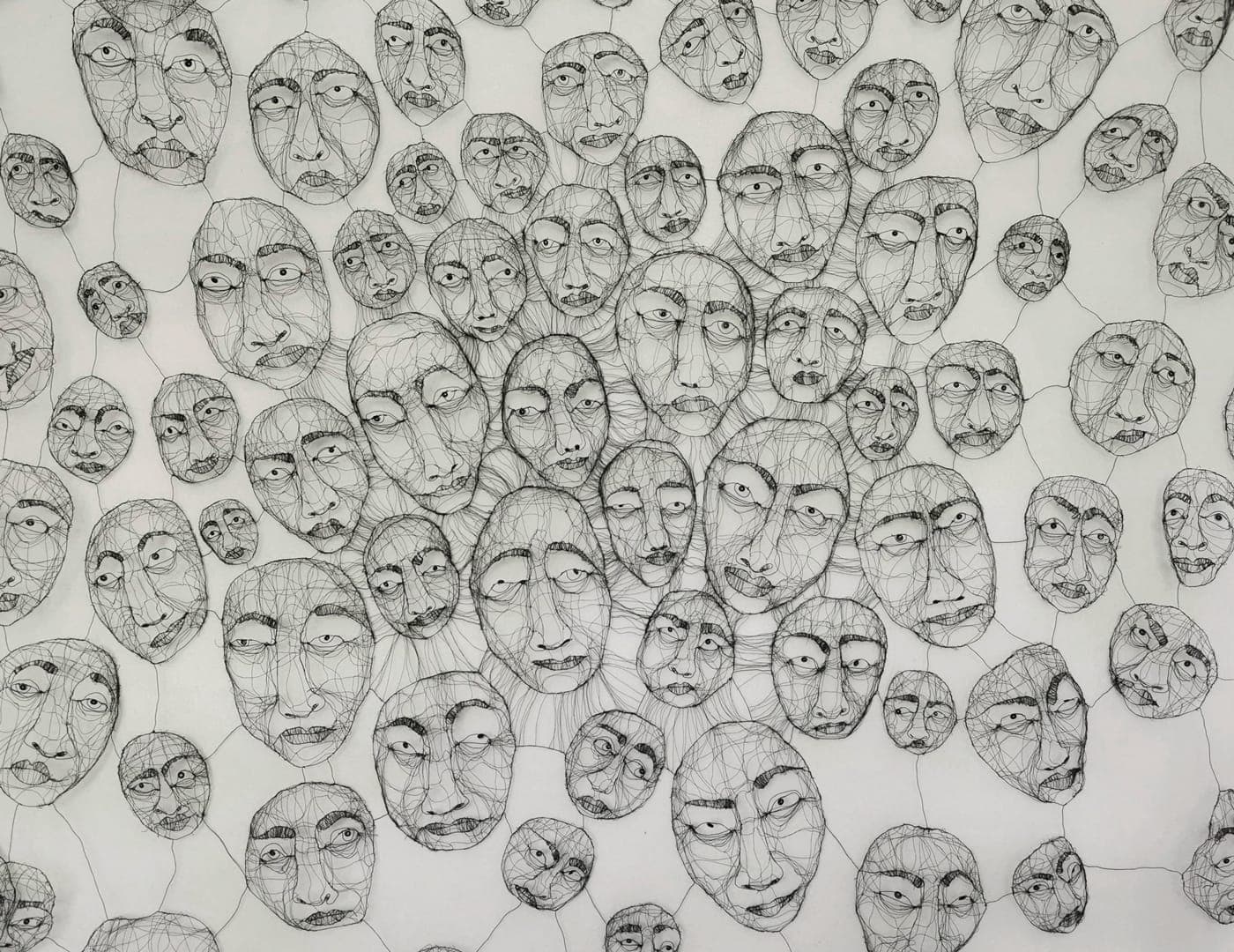
Ultimately, Morley's wire drawings are a meditation on the delicate nature of life itself. In an era that often prizes permanence, her sculptures embrace their own visual weightlessness, existing as quiet interventions in space rather than heavy monuments.
"My work tries to express the fragility of our existence," Morley reflects. "It's ephemeral and fleeting, and I see our short lives as just imprints in time. And I find so much precious and beauty in this." In the quiet of her Brighton garden, using nothing more than her hands, some snippers, and a roll of wire, Morley continues to map these imprints, capturing the invisible, beautiful ties that connect us all.
Enjoy our stories? Choose us as a preferred source to see more of them in Google's Top Stories.
Add us on GoogleKeep reading
Related Articles
“Barcelona sculptor Samuel Salcedo on trading canvas for iron and concrete, the memory held in rust, and why getting 'lost a little bit everywhere' is his creative method.”
“French sculptor Marc Sparfel on how Barcelona's discarded street furniture sparked his reinvention — from tribal-inspired wooden masks to abstract 'architectonical landscapes' built on pure energy and intuition.”
“Barcelona-based abstract sculptor Vanesa Muñoz on mutating the chaos of the world into aesthetic order, working as a 'sculptor of concepts' in cables, wood and glass, and why creating the beautifully useless is a radical act.”
