

Music
New York · United States
No classes yet.
The New York Times calls him the "ambassador for a silenced music."
Honored as a peacemaker and virtuoso, Amir Alan Vahab is one of New York’s most celebrated and distinguished composer / vocalists of sufi and folk music. He sings in many different languages with a unique mystical style. The virtuosos of Amir weave fiery instrumentals and songs of the Ancient land of the Middle East that include Persian, Turkish, Azeri and beyond. As an instrumentalist, he plays and teaches the tar, setar, tanbour, saz, oud, ney, daf and zarb.
He began his musical studies at an early age and by his late teens, Amir Vahab was already an accomplished musician and a music teacher.
Amir studied in London from 1976 to 1979 and went to University of Paris from 1979 to 1981. After completing his degree in Linguistics at the University of Paris, he moved to Switzerland to study horology and jewelry design. In 1981, Amir Vahab moved to his current home of New York City. Here in New York, he established himself as a professional musician, both in live shows and in recording studios. He has played before audiences ranging from select private shows to crowds of 6,000 people. In addition, he has composed eclectic music for theatre, film and performed for several television and radio stations (HEAR A RECENT INTERVIEW HERE) in the United States. His performances have been recognized world wide and have inspired many music students to appreciate the classical delicacy of the unique sounds created by the mystical instruments that he has mastered. Today, Amir has seven albums (SEVERAL ARE IN ITUNES) to his credit, for many of which he is the composer, singer and player.
In his work, Amir Vahab tries first of all to illustrate the beauty of Iranian traditional music, which he believes is part of the global heritage, and needs to be both taught and preserved. Secondly, he has also attempted to take new approaches to traditional works in order to attract the young generation of music enthusiasts - a venture which has proven most successful.
Amir Vahab is currently Teaching and lecturing private and group classes in universities, libraries, museums and cultural centers on the one hand, and organizes music therapy workshops on the other.
“Music should be so powerful such that one is powerlessly dragged to the unknown. It should invade the listener’s mind to the point of losing awareness.”
-Amir Vahab
AMIR VAHAB & ENSEMBLE (Soroosh):
The Ensemble was formed by Amir Vahab in New York City in 1981 to perform both the mystical music of the Sufis and the folkloric music of different regions of Iran & Turkey. The aim of Amir Vahab Ensemble is to draw the listener’s attention to the spiritual dimension of existence. The ensemble, whose name means “Messenger Angel”, features Mr. Vahab (vocals, tanbur, tar, setar, saz, Oud, ney, daf, Dohol and zarb) together with a rotating group (of over 40 people) from musicians of diverse national and ethnic backgrounds, chosen depending on the focus of the performance.
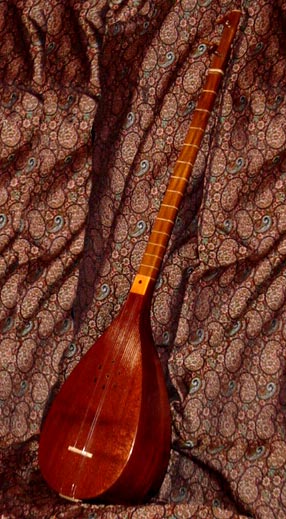
Ancient three-stringed long-necked lute dating back to five hundred B.C. This lute acquired a special status in the 15th century, and has never been played for secular purposes since then. More Info >>
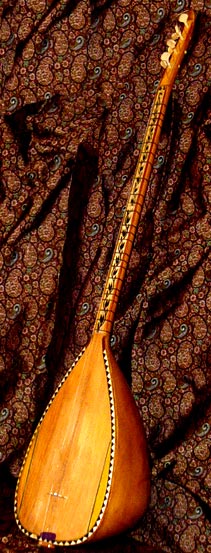
Eight-stringed Tanbur also known as Saz-e Asheghan "Instrument Of Lovers".More Info >>
Small four-stringed persian lute. The player normally plucks the strings with the nail of the index finger. The ancestry of the setar can be traced to the ancient tanbour of pre-Islamic Persia.More Info >>
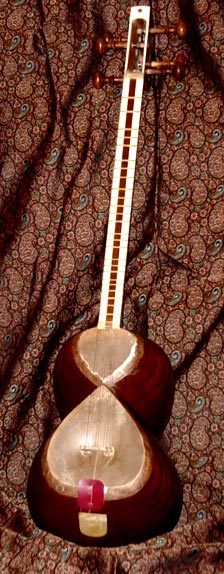
(Persian plucked lute) emerged in its present form in the mid-eighteenth century. It became the chosen instrument of the great Persian classical masters. More Info >>
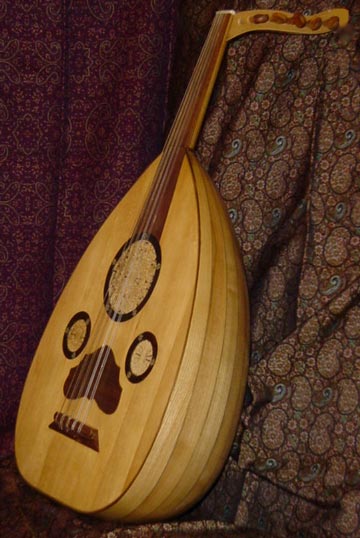
Persian eighth century lute, its fretless short-neck produces microtones. It has a deep earthy sound. (Claimed to be the ancestor of the Arab Oud.)More Info >>
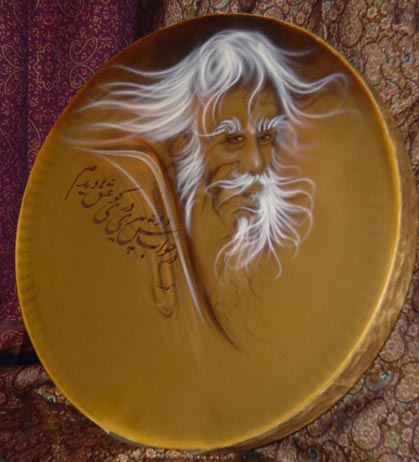
(Large frame drum) associated with Kurdish Sufi Rituals, is used to create merriment and to stir the emotions. The thundering tones of the Daf are unsurpassed by any other king of drum. More Info >>
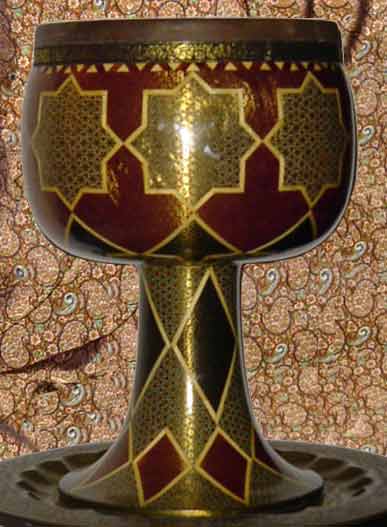
(Persian goblet drum) also known as Zarb. The elaborate finger technique consists of various rolling and snapping styles, which allow for a great variety of sounds. More Info >>
Dumbek, also known as Tabla or Darbuka. More Info >>
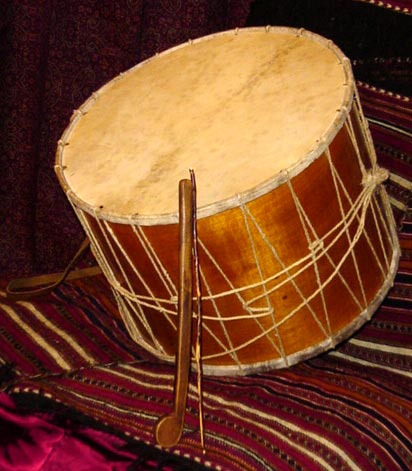
(Double-headed folk barrel drum) used most often in celebrations. Its powerful and joyful sound compels listeners to dance. More Info >>
(Persian Fiddle) is ancestor to most modern bowed instruments, whose subtle sounds imbue the music with a sense of nostalgia. More Info >>
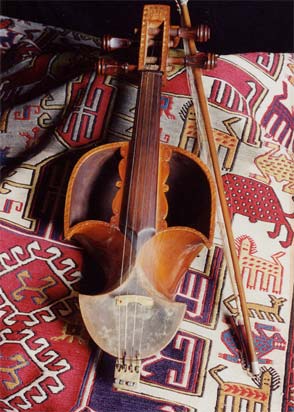
(Persian Folk Fiddle) also known as Sorood, mostly played in south of Iran. More Info >>
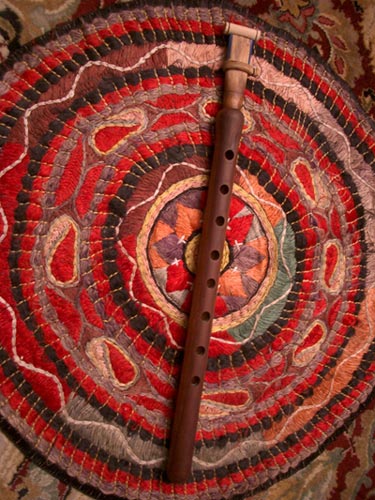
(Reed Flute) The Persian style of the ney is seven-jointed, and has five finger holes in the top and one in the bottom. Its mystical sounds have healing powers. More Info >> Sorna
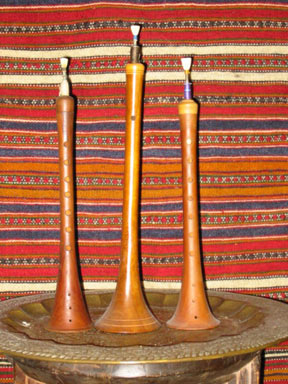
Sorna is defined etymologically as Sur-ney (festival flute). A type of oboe usually accompanied by the dohol which are used for folk dancing, weddings, competitions, and festivals. More Info >> Balaban
Also known as Duduk by Armenians and Mey by the Turks. More Info >>
Santoor/Santour/Santur also known as (Dulcimer).
More Info >>
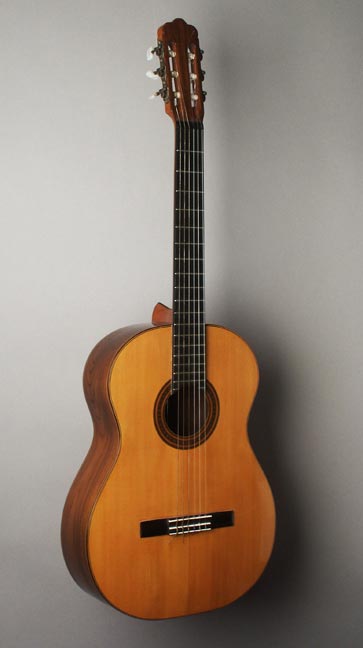
Guitar
More Info >>
Website
http://www.tanbour.org/No favourites yet.
No events yet.
No contact info yet.